


Towel materials, printing & finishing
Three decisions shape a custom towel. The construction depends on how the towel will be used and washed, the decoration method on the artwork, and the labels and packing on how it will be sold or handed out. The sections below explain how we approach each one.
Final specifications are always confirmed with you during sampling.
Start with how the towel will be used
The fabric is chosen around the towel’s job: how it is printed, how often it is laundered and how it should feel. If you have no preference yet, tell us the intended use and we will propose options.
Cotton / polyester blend
A balanced hand feel for printed and everyday formats.
- Printed and everyday formats
Sublimation build
A polyester or microfiber face that carries the print, over a cotton back that does the drying.
Velour & jacquard
A sheared, smoother face, or patterns and borders woven into the cloth.
Peshtemal / flat-woven
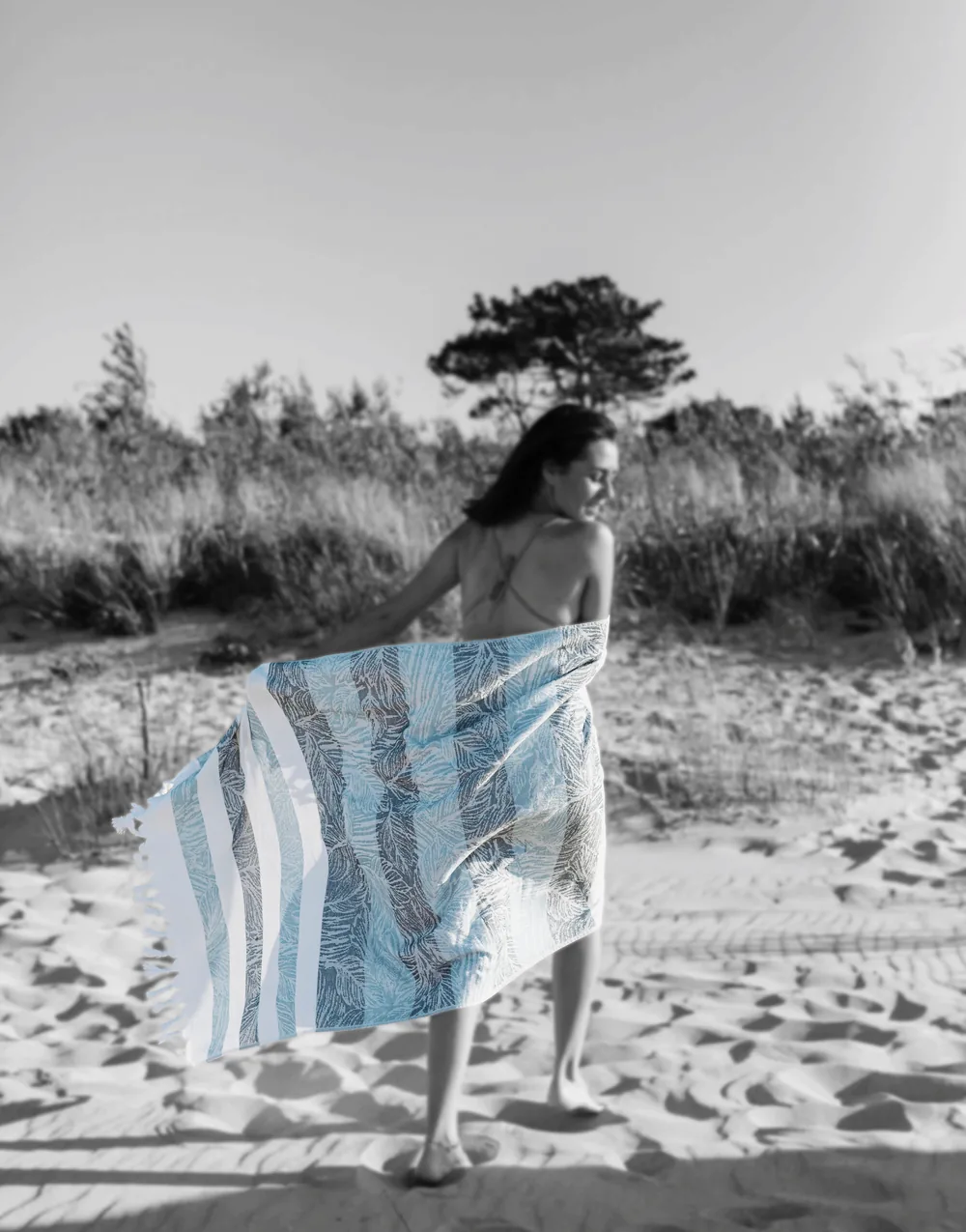
Light, quick-drying and packable, with woven stripes and hand-tied fringes.
Size, weight (GSM) and construction are confirmed per project. We don’t publish fixed weights for every product: the right weight depends on the intended use and is agreed during development.
Choosing the towel weight (GSM)
GSM (grams per square metre) is the usual way to state how heavy a towel is. A higher GSM generally feels denser and holds more water; a lower GSM dries faster, packs smaller and costs less. Yarn and construction matter too, so two towels at the same GSM can feel quite different.
| Typical range | How it feels | Common uses |
|---|---|---|
| Under 400 gsm | Lighter and quick-drying | Gym, sports and promotional towels |
| 400–550 gsm | An everyday balance of softness and absorbency | Beach and standard hotel towels |
| 550–650+ gsm | Plush and dense | Spa, luxury hotel and premium retail |
These are common industry starting points, not fixed Mira specifications. The weight of your towel is agreed per project and confirmed in sampling.
All-over printed towels are the exception: our stock construction is 250 GSM, because a lighter polyester print face gives sharper sublimation results. Stock construction and MOQ
Sublimation or cotton printing?
Both routes print your artwork onto the towel, but they suit different designs and give a different hand feel. The choice usually follows the artwork.
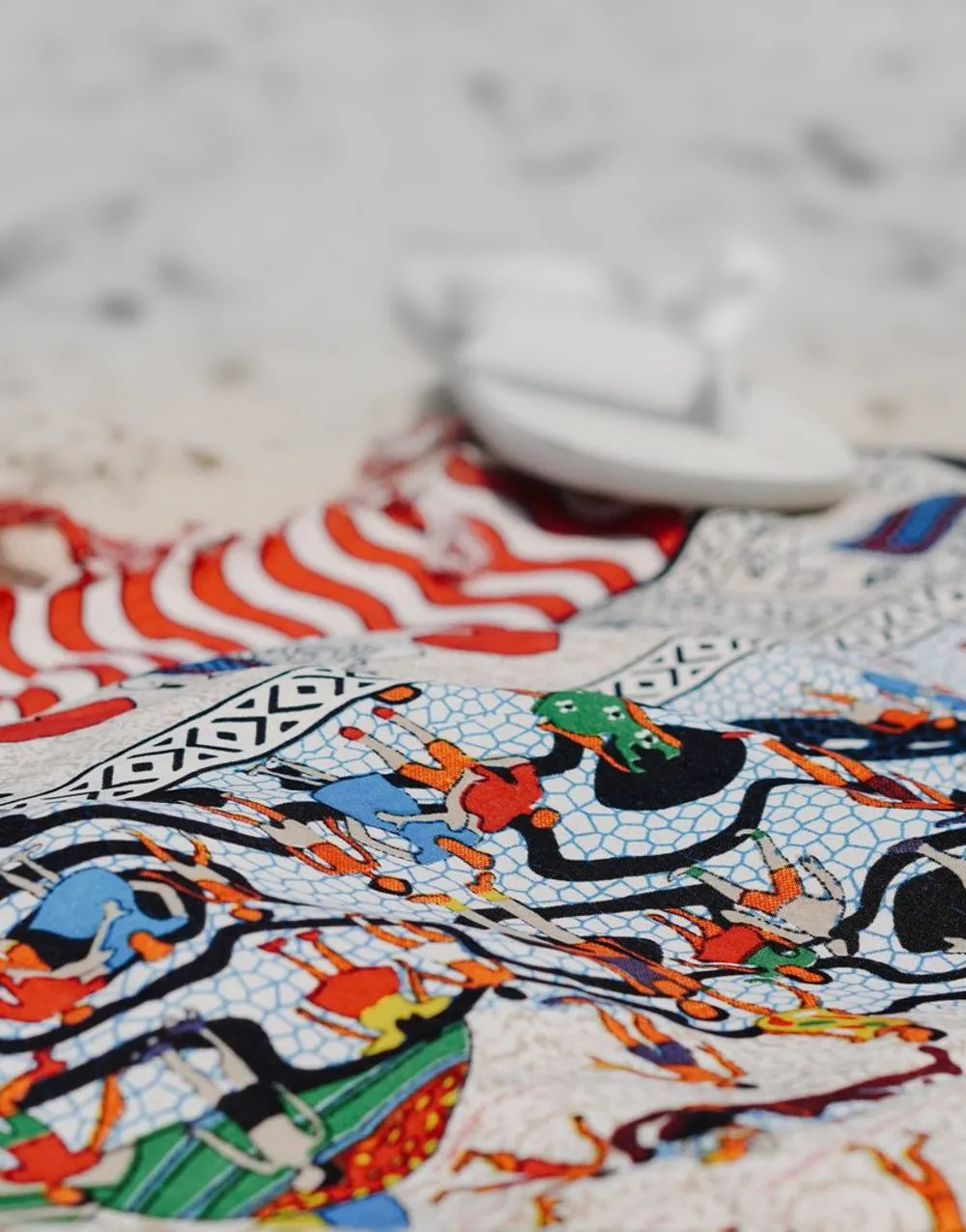
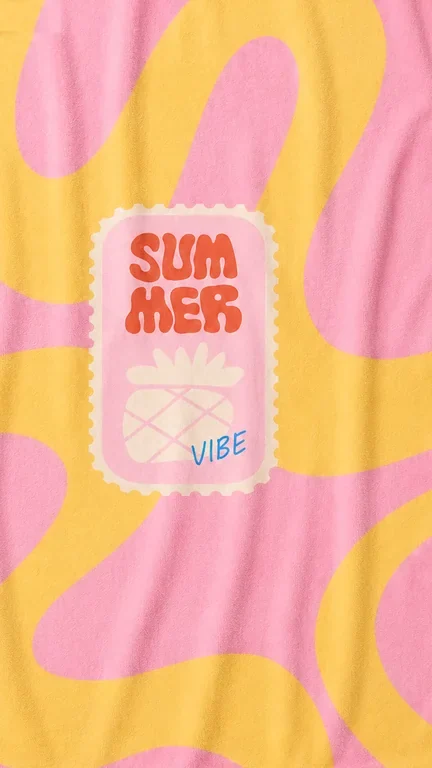
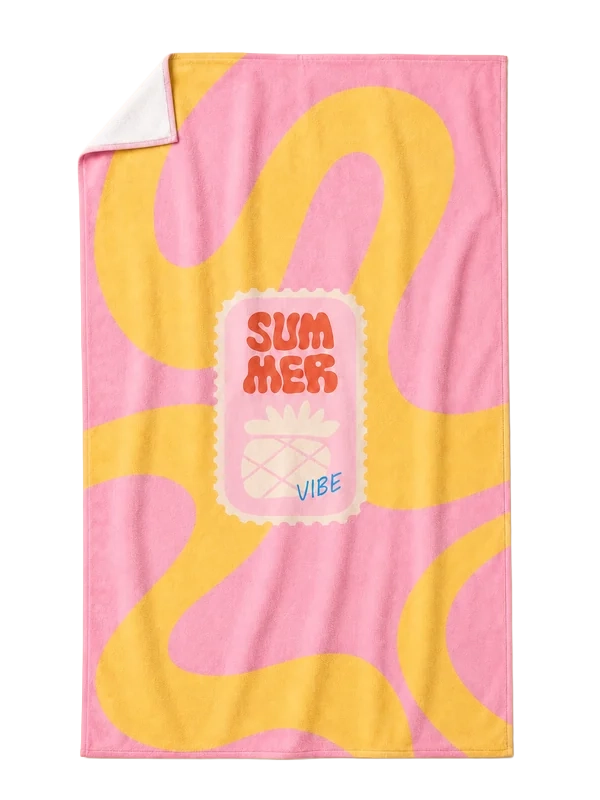 SublimationSummer Vibe Beach Towel · MIRA-PT-003 | 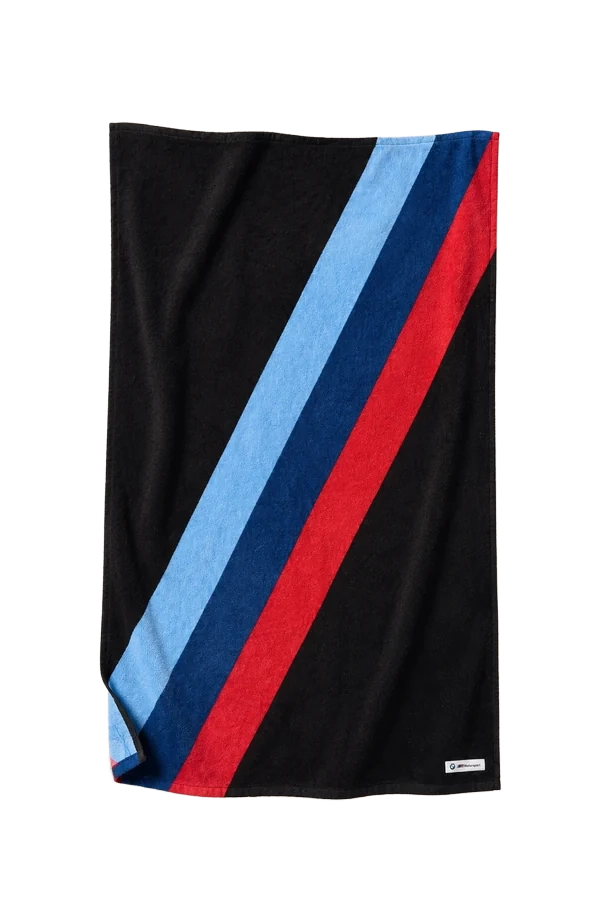 Reactive printing on cottonReactive-Printed Cotton Towel · MIRA-PM-010 | |
|---|---|---|
| Printed face | Polyester or polyester-rich face; the reverse is usually cotton terry | Cotton; the dye bonds into the cotton fibres |
| Best for | Photographs, gradients, fine linework and full-surface artwork | Simpler designs where a full-cotton hand feel matters |
| Colours | No practical colour limit: a thirty-colour design prints like a two-colour one | Agreed per design during artwork review |
| Hand feel | Smooth print face, absorbent cotton reverse | Soft, absorbent cotton on both faces |
| Typical programmes | Retail ranges, promotional campaigns, beach clubs and licensed merchandise | Promotional, merchandise and team programmes |
And pigment printing?
With pigment printing the colour sits on the surface of the cotton rather than bonding into it. It is a cost-effective route for simpler placed designs and larger areas, with a slightly firmer hand than reactive printing.
If you are not sure which route fits your design, send the artwork and we will advise.
Stock construction, sizes and MOQ for all-over printed towelsWoven and stitched branding
A logo does not have to be printed. On hospitality and premium programmes the branding is often woven into the cloth or stitched on instead.
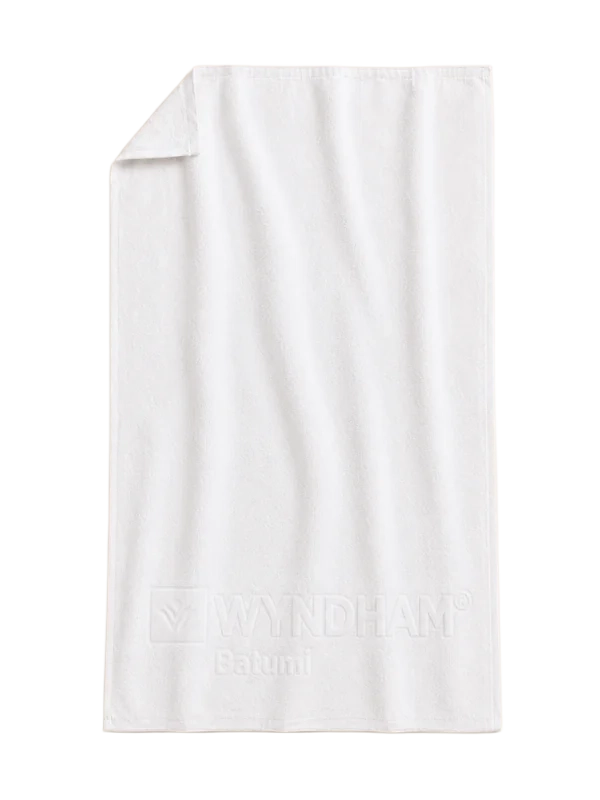 Jacquard & dobbyPatterns, borders and tone-on-tone logos woven into the towel during weaving rather than printed on afterwards.Seen on: White Jacquard Hotel Towel Logo shown as an example of custom branding; any third-party logo belongs to its respective owner.
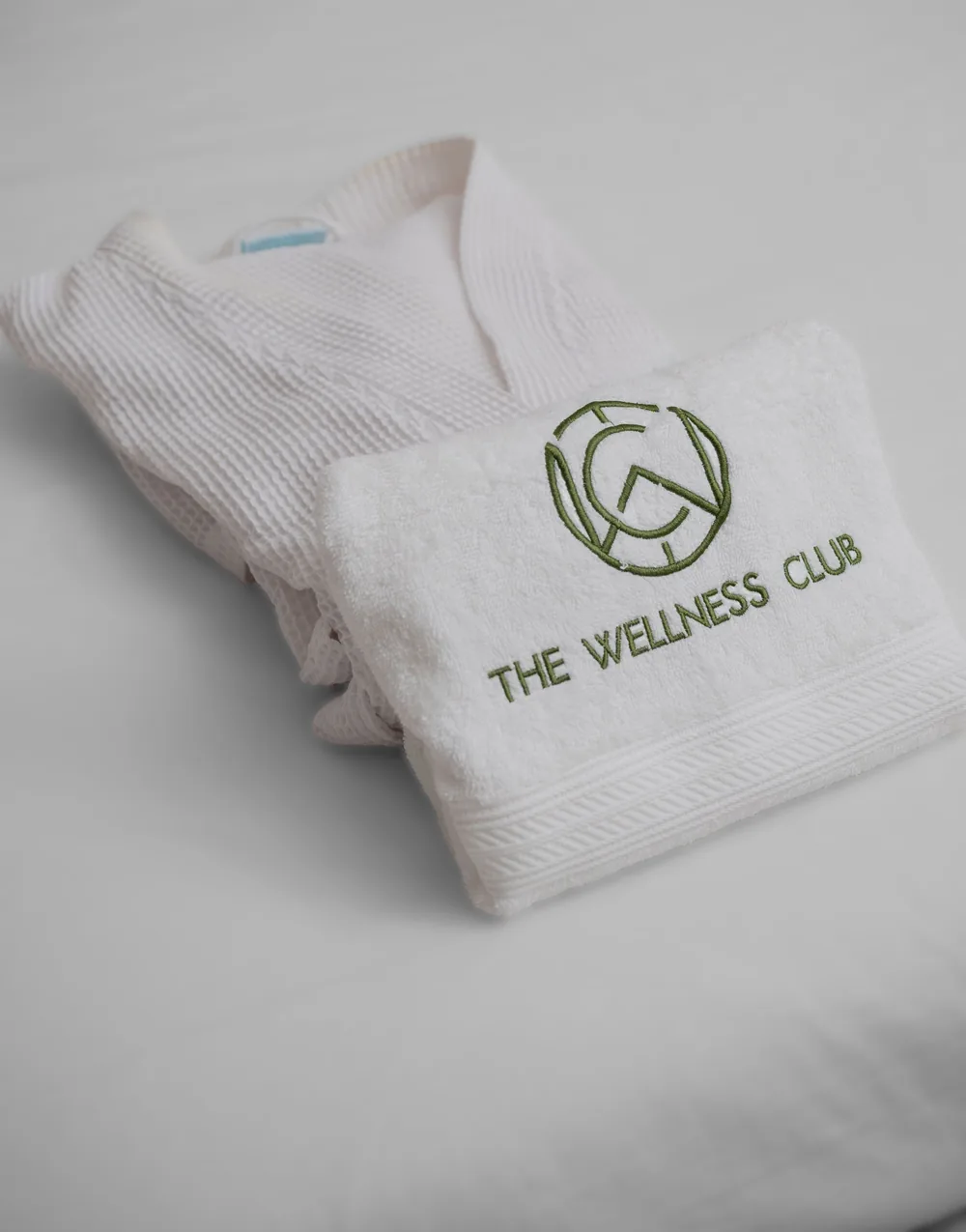
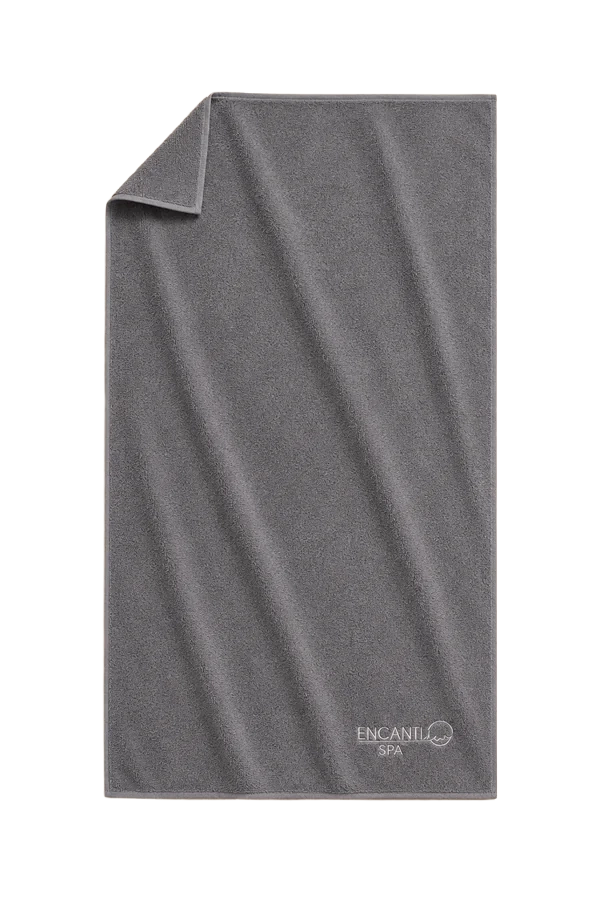 EmbroideryA raised, stitched logo or monogram for a premium finish on towels and bathrobes, shown here tone-on-tone on a spa towel.Seen on: Embroidered Grey Spa Towel
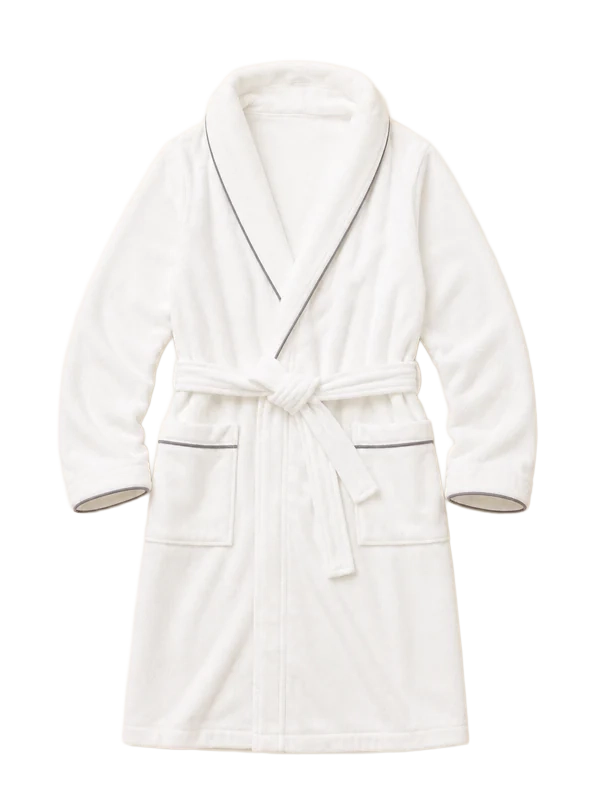 Bathrobe brandingRobes are finished with embroidery or woven labels; collars, belts and pockets are part of the brief.Seen on: White Shawl-Collar Bathrobe
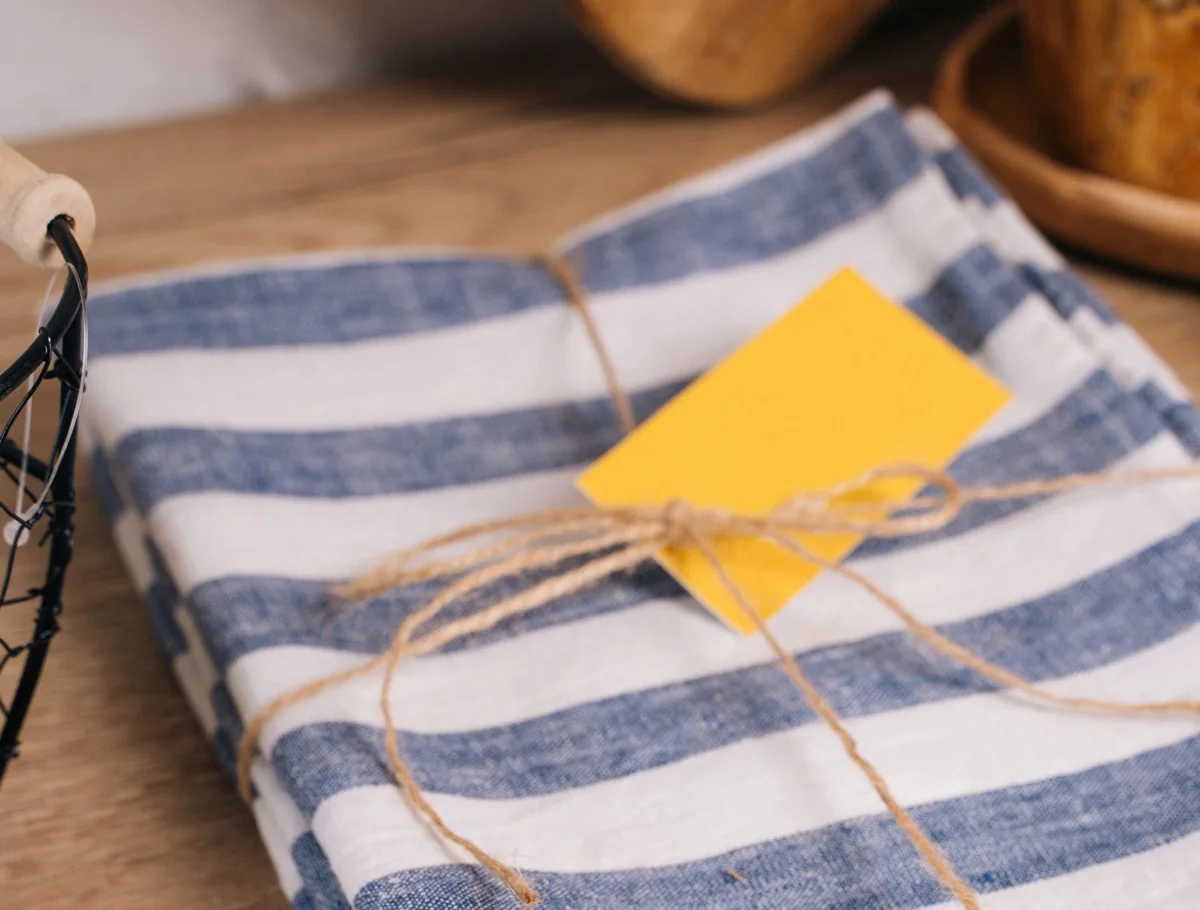
Labels, hangtags & packaging
A towel rarely ships bare. We build the labelling and packing around where it ends up: a retail shelf, an event giveaway or a hotel linen room.
Retail collection
- Woven or printed brand labels
- Hangtags
- Barcodes if required
- Retail-ready packing
Campaign & promotional
- Printed belly band
- Individual polybag
- Campaign-ready packing
Hospitality
- Care labels
- Plain or branded towels
- Packing adapted for hospitality use
Export cartons
- Carton planning
- Carton marks
- Documentation for the destination
Hems, fringes and edges are finished to suit the towel type, for example with hand-tied fringes on peshtemals.
Questions about materials and printing
Look up a term in the textile and towel glossaryWhich towel printing method lasts longest in the wash?
Reactive printing on cotton and sublimation on a polyester face both hold up through washing, because in each case the dye becomes part of the fibre. Reactive dye bonds into the cotton fibres, so the printed area also stays soft. Which one suits your towel depends on the face fabric and the design.
Does a heavier towel print better?
Not for sublimation. On all-over printed towels a 250 GSM construction is generally preferred for sharper print results. Heavier custom weights are possible, and the print result is confirmed during sampling.
Can a logo be woven into the towel instead of printed?
Yes. Jacquard and dobby weaving build patterns, borders and tone-on-tone logos into the cloth on the loom. This is common on hotel and spa towels.
Have artwork and a target use?
Send what you have, even if the brief is still open. We propose the construction, decoration method and packing, then confirm everything in sampling.