



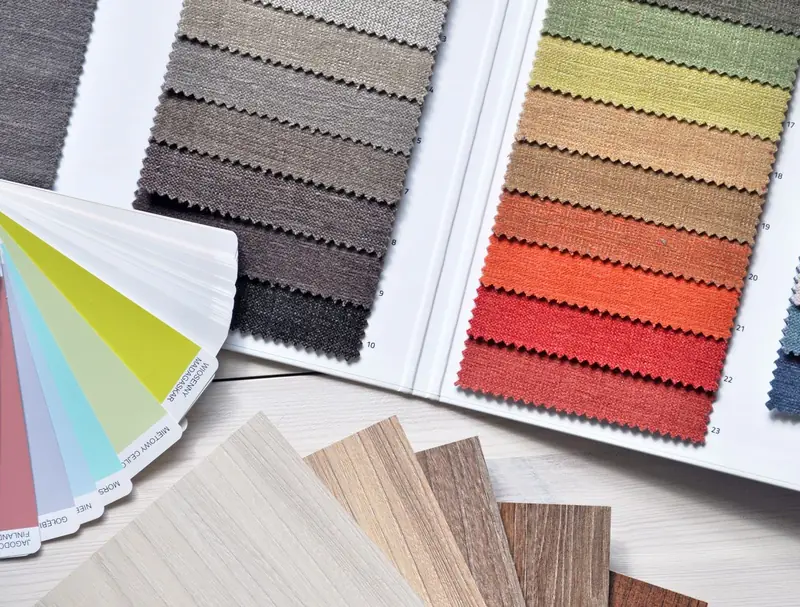
Towel manufacturing process
Towels are made in two quite different ways. For a conventional cotton towel, cotton fibre is spun into yarn and woven into loops on a terry loom, and the fabric is then bleached or dyed, finished, cut and sewn. An all-over printed towel is built around a polyester face that sublimation dyes can colour, backed with cotton for absorbency, and its design is transferred into the fibre with heat. This resource follows both processes stage by stage, compares them, and explains how towel quality is tested.
The process descriptions are general industry practice. Statements about Mira Towels’ own production are marked and limited to what we publish elsewhere on this site.
Two manufacturing systems
Most towels are terry: a woven fabric whose surface is covered in uncut loops of yarn. The loops are the working part of the towel. They multiply the fibre surface that meets the water and hold it in the spaces between them, so every decision in conventional towel manufacturing, from the choice of cotton to the softener in the last rinse, is judged by what it does to those loops.
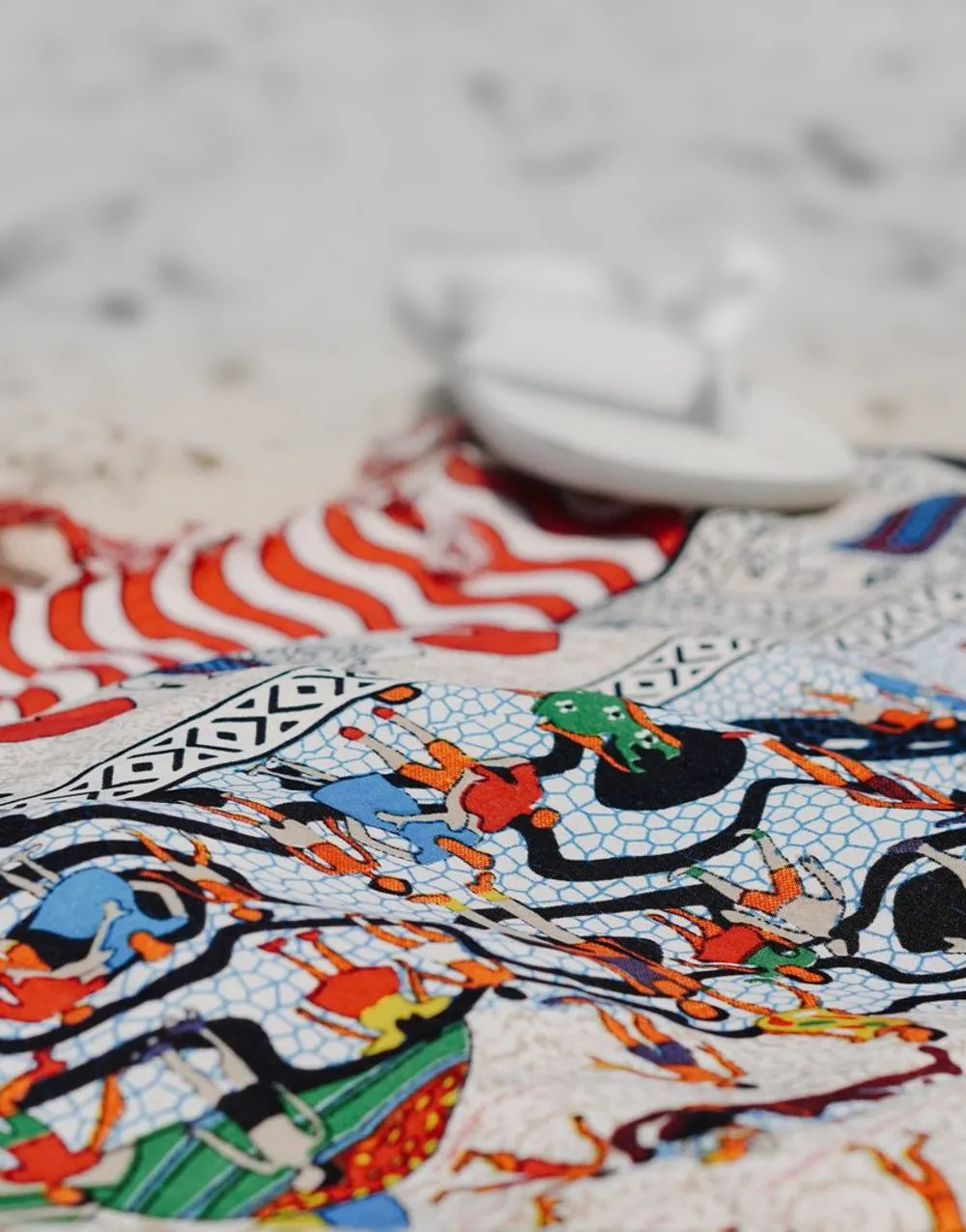
All-over printed towels follow a different logic. Photographic, edge-to-edge artwork is reproduced most reliably by dye sublimation, and sublimation dyes colour polyester, not cotton. A printable towel therefore needs a polyester surface for the image and a cotton surface for drying, and its production is organised around the print rather than around the dyehouse.
Cotton terry towel: process flow
- Fibre selectionStaple length, maturity and cleanliness
- SpinningCarded or combed; ring or rotor yarn
- Warping and sizingGround and pile warp beams
- Terry weavingLoose-pick beat-up forms the loops
- Greige inspectionFaults, width and weight
- PretreatmentDesizing, scouring, bleaching
- DyeingUsually reactive dyes, then wash-off
- Finishing and dryingSoftening, tumbling, relaxed drying
- Cutting and sewingHems, edges, labels
- Inspection and packingSize, weight, shade, folding
Polyester-face, cotton-back sublimation towel: process flow
- Two-face fabricPolyester print face, cotton reverse
- Fabric preparationCleaning, heat setting, pre-shrinking
- Artwork and colourBleed, resolution, ICC profile
- PrintingOnto transfer paper or direct to fabric
- Heat transferDye diffuses into the polyester
- Cutting and alignmentPanels cut to the printed layout
- Sewing and edgesHems, overlock or binding
- Inspection and packingPrint, colour, edges, size
Simplified sequences. The order and number of stages vary between mills and products, and some stages run in-line.
How cotton terry towels are made
Each stage fixes a property that later stages cannot fully correct. Fibre quality limits the yarn, the yarn limits the loops, and wet processing decides how much of cotton’s natural absorbency survives into the finished towel.
Cotton fibre: length, maturity and cleanliness
Cotton is bought by measurable fibre properties rather than by origin name alone. Staple length and length uniformity decide how many fibres overlap in the cross-section of a yarn and how firmly twist can bind them; longer, more uniform fibres spin into finer, stronger and less hairy yarns. Micronaire, an airflow reading that reflects fineness and maturity together, indicates how well the fibre walls have developed. Immature fibres have thin walls, tangle into small knots called neps during processing and take dye less evenly, which can appear later as pale specks on a dyed towel. Trash and colour grades describe cleanliness: leaf and seed-coat fragments must be removed in opening and cleaning, and whatever remains becomes a visible fault or a weak point in the yarn. In the United States these properties are measured instrumentally for every bale[1].
In a towel, the pile yarn deserves the closest attention because it forms the surface the user touches and the loops that take up water. The ground yarns carry the structure and are chosen mainly for strength and weaving performance.
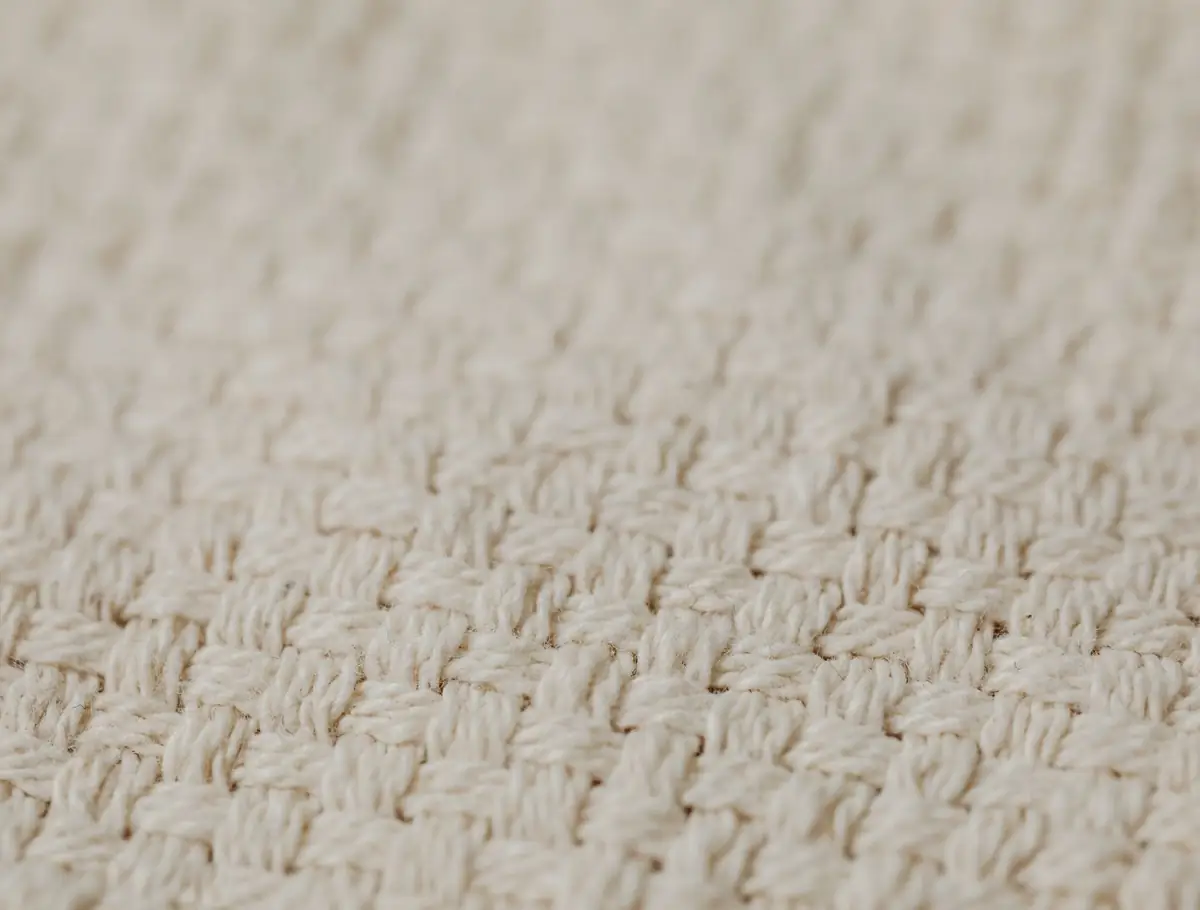
Spinning: carded, combed, ring-spun and open-end yarns
After opening and blending, carding separates the cotton into a thin web, removes much of the remaining trash and short fibre, and condenses it into a sliver. Carded yarn is spun from that sliver. Combed yarn passes through an extra combing stage that removes a further share of short fibres and neps, which gives a more even, smoother and stronger yarn; the cost is higher because part of the cotton leaves the process as comber waste.
Two spinning systems dominate towel yarns. Ring spinning draws the fibre strand down and inserts twist with a rotating spindle and traveller. It produces a strong yarn with well-aligned fibres and remains the reference system for quality pile yarn. Open-end, or rotor, spinning builds the yarn inside a fast-turning rotor at a much higher production rate. From the same cotton, rotor yarn is more even and less hairy than ring yarn but 10 to 30 percent weaker[2], and it has a harsher hand, so it appears mainly in ground and weft yarns and in economy towels. Reviews of terry research also report that ring-spun pile yarn absorbs water faster than rotor-spun yarn[5].
Yarn fineness is stated as a count. Towel mills generally use the English cotton count (Ne), the number of 840-yard hanks in one pound of yarn, so a higher number means a finer yarn; the tex system, grams per 1,000 metres, runs the other way. In one documented Indian terry cluster, ground warps are carded two-ply yarns of Ne 20/2 or 24/2, chosen because ground ends carry the highest tension in weaving, while pile warps are combed single yarns of Ne 16 or 20[3]. That division is typical: strength in the ground, softness and bulk in the pile.
Twist holds the fibres together. More twist raises strength up to a point, but it also packs the fibres tightly, which makes loops firmer and leaves less space between the fibres to hold water. Low-twist and zero-twist pile yarns were developed mainly to raise absorbency[5]. Zero-twist yarns are made by twisting cotton together with a water-soluble fibre that is dissolved out during wet processing, leaving the cotton almost untwisted. The trade-off is durability: the less twist a pile yarn has, the more easily fibres shed and loops lose definition over repeated laundering.
Ground warp, pile warp and weft
A terry fabric is built from three sets of yarn. The ground warp runs lengthwise under high tension and, interlaced with the weft, forms the base cloth that holds the towel together. The pile warp also runs lengthwise, but it is let off under low, controlled tension so it can be pushed out of the plane of the cloth to form loops. The weft, or filling, crosses the width of the fabric and locks both warps in place. Because each loop consumes extra length, the pile warp is used up several times faster than the ground warp, so the two are wound on separate beams and fed independently on the loom.
Warping winds hundreds or thousands of ends from a creel onto these beams at even tension; uneven tension shows up later as streaks or irregular pile. Ground warp yarns are rubbed constantly by the heddles and reed, so they are usually sized with a starch or synthetic film that protects them during weaving and is removed afterwards. Practice for pile warps varies, and plied pile yarns are often woven with little or no size. Before weaving, every end is drawn through its drop wire, heddle and reed dent in the order the design requires.
Terry weaving: how the loops are formed
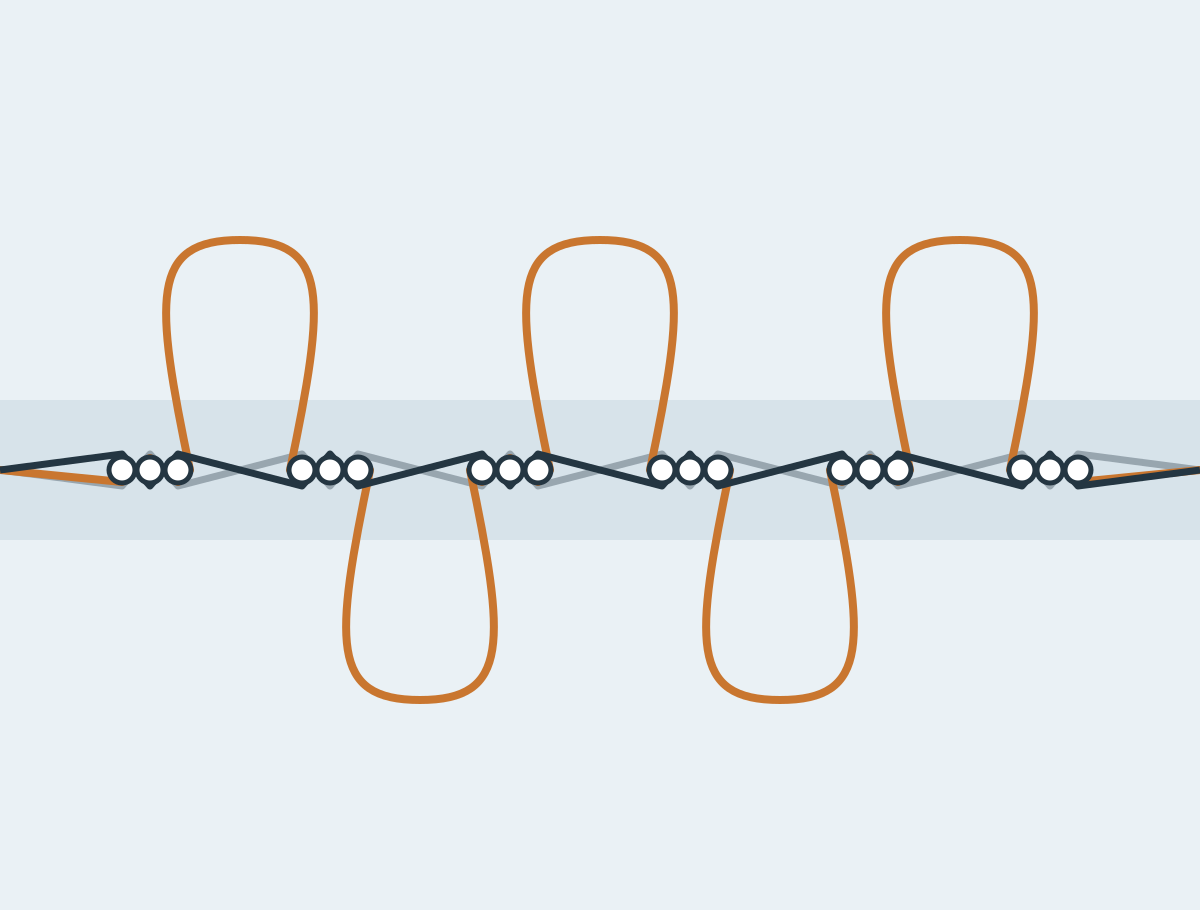
Terry weaving is ordinary dobby or jacquard weaving with one special feature: the beat-up changes position. In a three-pick terry, the first two weft picks of each group are deliberately stopped short of the cloth fell, leaving a gap called the loose-pick distance. On the third pick the full beat-up pushes all three picks together against the fell. The tightly held ground warp cannot follow, but the slack pile warp, gripped between the picks, is carried forward and buckles out of the cloth to form a loop on the face or the back, depending on the weave[3].
Pile height is set mainly by the loose-pick distance together with the pile warp let-off. Depending on the machine, the loose pick is created by shifting the reed or by moving the cloth fell back and forth. Electronically controlled terry looms can program pile height along the towel without stopping; one current loom generation offers settings from zero to twelve millimetres[4]. This is how a single towel combines a looped body, a flat woven border and a band with a different pile height.
Three-pick terry is the standard construction for bath and hotel towels. Two-pick terry has largely disappeared because its loops are unstable. Four-pick terry adds a further pick to each group, so each loop is bound by more weft and fewer loops are formed per centimetre of length; it is woven far less often, partly because the beat-up sequence is more complex[3]. Constructions with more picks are used for special effects. Anchorage matters in use: loops that are weakly bound are pulled out by rings, hooks and abrasion, leaving snags and long pulled loops. Resistance to loop extraction can be measured with a dedicated European test method, EN 15598.
Pile density is the number of loops per unit area. It follows from the number of pile ends per centimetre across the width and the number of loops per centimetre along the length. Pile height, density, yarn count and the ratio of pile to ground yarn together determine the weight of the towel, its hand and how much water it can hold. Research on terry fabrics finds that the rate of water absorption rises with loop density and loop length[5]. A tall, sparse pile feels soft at first but flattens and tangles; a shorter, denser pile is more stable, though it can feel firmer.
Single-sided terry carries loops on one face only and is used where one smoother face is wanted. Double-sided terry, with loops on both faces, is the normal bath towel. Patterns are woven in two ways. A dobby head controls a limited number of heald frames and weaves geometric borders, plain bands and simple patterns. A jacquard head controls warp ends individually or in small groups and can weave lettering, logos and pictorial designs, including tone-on-tone effects where pile and flat areas form the motif. In two-colour jacquard terry, pile ends of one colour are raised on one face and the other colour on the reverse, so the design appears on both faces in opposite colours.
- Ground warp (high tension)
- Pile warp (low tension)
- Weft picks 1, 2 and 3
- Loose-pick distance before full beat-up
- Loops formed on the face and the back
Greige inspection
Fabric straight off the loom is called greige, or grey, goods. It is inspected before wet processing because faults become harder and more expensive to trace afterwards. Inspectors look for broken or missing ends, which leave lines without loops; weft faults such as thick places and double picks; uneven loop height; pulled or flattened loops; oil stains from the loom; and errors in border patterns. Width and weight per unit area are checked against the construction, since both drift when warp tensions or pick density are wrong.
Desizing, scouring and bleaching
Raw cotton and sized yarn absorb water poorly. The size film on the ground warp and the waxes, pectins and proteins on the fibre surface repel water, so the first wet stages remove them. Desizing breaks down starch size, usually with amylase enzymes, or washes out water-soluble synthetic size. Scouring in a hot alkaline bath emulsifies the natural waxes and removes most remaining impurities; after it, cotton wets almost instantly. Bleaching, most often with hydrogen peroxide under alkaline conditions, removes the natural yellowish colour to give a white towel or a clean base for bright and pale shades, and optical brighteners may be added for high-white hotel towels.
Modern dyehouses often combine these steps to save water and energy, but each must still be rinsed out thoroughly. Residual alkali, peroxide or size interferes with dyeing, can yellow the towel in storage and weakens the fibre.
Dyeing cotton towels
Towels are coloured either as yarn or as fabric. Yarn dyeing, on packages or beams, is needed for stripes, checks and two-colour jacquards, where different ends must carry different colours. Piece dyeing colours woven fabric or finished towels in batches, usually in winch or jet machines that move the fabric gently through the dye liquor so the loops are not crushed.
Reactive dyes are the main dye class for cotton towels. Salt drives the dye onto the fibre, and alkali then makes it react with the hydroxyl groups of cellulose to form a covalent bond[6]. Because the colour is chemically bound, a well-dyed reactive shade withstands washing. Part of the dye, however, reacts with water instead of the fibre. This hydrolysed dye has no bond and must be removed by a sequence of hot rinses and soaping baths. If the wash-off is incomplete, loose dye bleeds in the first domestic washes and stains other items, a common cause of failed washing-fastness tests. The fabric is then neutralised to a near-neutral pH, which matters for skin contact and for the finishing chemicals applied next.
Finishing: the balance between softness and absorbency
After wet processing the loops are tangled and the hand can feel dry and harsh. Finishing corrects this chemically and mechanically. Softeners lubricate the fibres so the loops slide and feel smooth. Cationic softeners, the basis of most conventional softening agents, coat the fibres with a fatty layer that makes the surface more hydrophobic, and research on terry fabrics consistently finds that softeners reduce water uptake while plain washing and tumbling increase it[5]. Hydrophilic softeners and careful dosing are used to balance hand and absorbency. This is why a towel that feels exceptionally silky on the shelf can absorb less in its first uses than one with a drier hand, and why absorbency often improves over the first launderings as the finish is washed out.
Mechanical finishing includes batch tumbling, which opens and fluffs the loops; shearing, which cuts the loop tips on one face to make velour; and, less often, brushing. Velour has a smooth, even surface that shows woven and printed designs clearly, but cut pile has been found to be less hydrophilic than uncut loops[5], so a velour face absorbs less than the same towel left in loop terry.
Drying, dimensional stability and shrinkage control
Cotton shrinks in washing as tension stored during weaving and wet processing relaxes, and terry adds its own movement because loops contract as they swell. Towel fabric is therefore dried in a relaxed state, in tumble or relax dryers, or on a stenter with overfeed rather than stretched flat to width. A fabric pulled out to size stores shrinkage that appears in the customer’s first wash. Residual shrinkage is measured by marking the fabric, washing and drying it by a standard domestic procedure and measuring it again, as described in ISO 5077 and ISO 6330. Shrinkage that differs between the pile body and the flat border produces wavy borders and puckered hems, a visible fault on hotel towels.
Cutting, hemming and border construction
Towels are usually woven as a continuous length, with a flat band at each towel end built into the pattern. Cross-cutting separates the towels through these bands, and wide fabric woven several towels across is long-cut between them. Side edges are finished either as woven selvedges or with overedge stitching, and the cut ends are folded and stitched into hems. Hanging loops, care labels and brand labels are sewn in at this stage.
Hems are a frequent point of failure on hospitality towels, because industrial laundering combines high temperature, strong mechanical action and repeated tumble drying. Stitch density, sewing thread and hem width should therefore be part of the specification rather than left to default, and the hem should lie flat after washing, not ripple against the towel body.
Embroidery and other customization
Embroidery is applied to finished towels or cut panels with a stabilising backing, often with a soluble topping that stops the stitches sinking into the pile. A woven jacquard logo is part of the cloth itself, while a printed logo on cotton uses reactive or pigment printing. The choice depends on quantity, the look required and how the towel will be laundered.
Final inspection, folding and packing
Finished towels are inspected piece by piece or by statistical sampling, commonly using acceptance quality limit (AQL) sampling plans such as those in ISO 2859-1. Checks cover size, weight, shade against the approved standard, hems and seams, pulled loops, stains and labelling. Weight is checked because it is a commercial specification: a towel that is lighter than agreed contains less yarn. Towels are then folded to the agreed format, labelled, bundled or individually packed, and packed into marked export cartons.
Reading a terry towel specification
A towel specification combines a few figures that are easy to compare and several that are not. The most common terms mean the following.
- GSM
- Mass per unit area of the finished towel in grams per square metre. It measures how much material a towel contains, not how good it is. A heavier towel holds more water in total and feels denser, but studies report that weight has little effect on how quickly a terry fabric absorbs, and lighter fabrics take up more water per gram[5]. A heavier towel also has more water to dry out and costs more to launder, so for gym, beach and kitchen use a lighter towel is often the better specification. Choosing the weight.
- Yarn count
- The fineness of pile, ground and weft yarns, usually in Ne (cotton count). Ply is written after the count: Ne 16/2 means two Ne 16 yarns twisted together.
- Pile height
- The height of the loops above the ground cloth, normally given in millimetres. With density, it determines softness, water capacity and how quickly the towel dries.
- Picks per loop
- Three-pick or four-pick terry. More picks per loop bind each loop with more weft and give fewer loops per centimetre of length.
- Pile-to-ground ratio
- How much pile warp the fabric consumes relative to ground warp, usually stated as a length ratio and sometimes as the pile share of fabric weight; the specification should say which (pile ratio). A higher share of pile generally means more absorbent surface; very high ratios need a strong ground to keep loops anchored.
- Fibre composition
- Given separately for pile, ground and weft where they differ. A towel with a cotton pile on a cotton-polyester ground is not a 100% cotton towel.
How all-over sublimation-printed towels are made
A sublimation-printed towel is a two-material product. The face is polyester because that is the fibre sublimation dyes can colour; the reverse is cotton because cotton takes up water far better than polyester. Many problems with these towels start when they are specified as if they were printed cotton towels.
Why sublimation needs polyester
Sublimation printing uses disperse dyes: small, non-ionic dye molecules with very low water solubility, developed for hydrophobic synthetic fibres. Heated to transfer temperature, the dye passes from the paper or fabric surface into the vapour phase. At that temperature polyester is well above its glass transition temperature: the amorphous regions of the polymer open up and the gaseous dye diffuses into the fibre. When the fabric cools, those regions close again and hold the dye inside[7]. The colour becomes part of the fibre rather than a layer on top of it, which is why a good sublimation print has no hand of its own and does not crack or peel the way a printed film can.
Cotton does not behave this way. Cellulose has little affinity for disperse dyes, so on cotton the dye stays largely on the surface and washes out. Transfer printing on natural fibres needs an intermediary polymer treatment or different dye chemistry to create the bond that disperse dyes cannot form with cellulose[8]. Coating cotton with such a polymer, or blending polyester into the yarn, makes some printing possible, but the colour then sits in the coating or only in the polyester share of the blend, with weaker colour and fastness than on a polyester face. Standard sublimation is therefore not a way to dye an ordinary cotton towel. Cotton is printed with reactive or pigment systems instead.
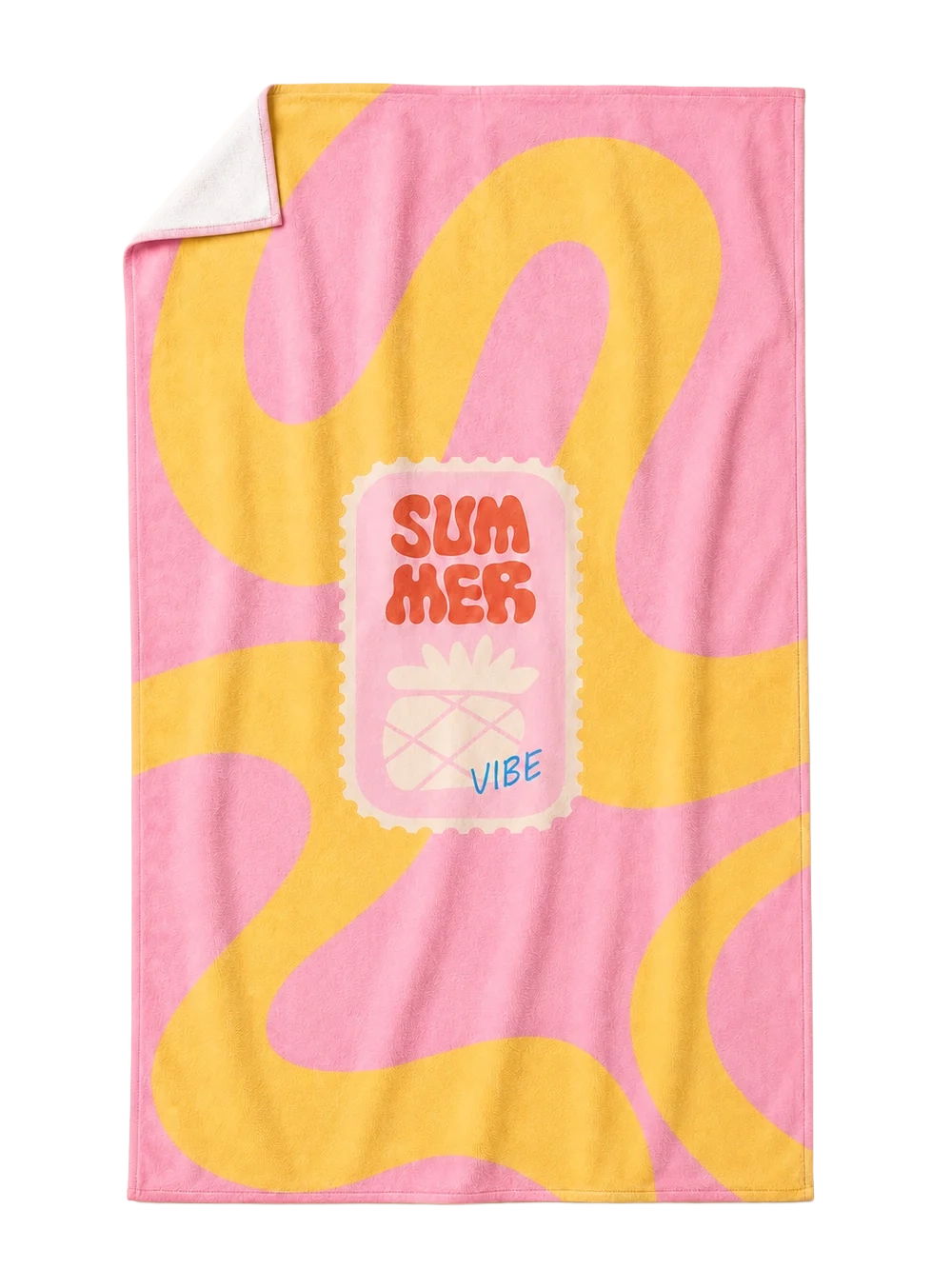
The polyester print face and the cotton reverse
Polyester absorbs very little water into the fibre itself. A polyester surface can be made to feel soft and to move water along its surface by wicking, particularly with fine filaments and microfibres, but it will not take up water the way cotton terry does. The cotton reverse supplies that absorbency and the familiar towel hand. The two faces have separate jobs: the face carries the image and the reverse dries the skin.
For printing, the polyester face should be dense, even and as flat as the construction allows. Surface height matters because dye vapour reaches the tips of a pile first. A tall loop prints with a broken, grainy image, and white roots can show when the loops part. Sheared velour-type faces, short dense loops and flat knitted or woven polyester surfaces all give sharper results. The whiteness of the polyester matters too. Sublimation dyes are transparent and there is no white ink, so white areas of a design are simply unprinted fabric and every colour is printed onto the base shade of the face.
How the two faces are combined
There is more than one industrial way to give a towel a polyester face and a cotton back, and they behave differently in printing and use.
- Two-face woven terry
A terry construction in which one face is formed almost entirely from polyester and the other from cotton. Because terry already uses a separate pile warp, the two faces can be fed with different yarns. Fabrics of this kind are sold specifically for transfer printing, with the polyester side printed and the cotton side left to absorb[9]. The polyester face may also be sheared to a velour finish, and the reverse looks and feels like a conventional towel.
- Knitted two-face fabric
Knitting can separate the fibres in a similar way. Plating places one yarn mainly on the face of the fabric and another on the back, so polyester can form the printable side and cotton the back or the loops. Knitted constructions are lighter and more extensible, which demands more care with dimensional stability in printing and sewing.
Whichever construction is used, only the polyester face carries the sublimated image. The cotton reverse keeps its own colour, usually white or a dyed shade.
Weight interacts with print quality. Making a two-face towel heavier usually means more or taller pile, and on the print face that works against sharpness. Lighter constructions are therefore often preferred when print definition is the priority.
- Polyester print face (shown sheared)
- Disperse dye held inside the polyester fibres
- Ground structure
- Cotton pile on the reverse
Fabric preparation and dimensional stability
Before printing, the fabric has to be clean, dry and dimensionally settled. Spinning oils and finishes on polyester cause uneven dye uptake and are removed in scouring. Polyester is normally heat-set during fabric finishing so that it does not contract at transfer temperature; unset polyester shrinks in the press and distorts the image.
The cotton reverse brings two specific risks. Cotton holds moisture, and at transfer temperature that moisture turns to steam, which can carry dye sideways and cause blurred edges or spots, so the fabric is often pre-dried or pre-pressed. Cotton also shrinks differently from polyester in laundering. If the composite is not relaxed or pre-shrunk before printing, the towel can bow, curl or pucker along its hems after the first wash, and the image distorts with it.
Artwork preparation and colour management
Artwork for an all-over towel is prepared at final printed size with bleed beyond the cut line, because the edge of the towel is made by cutting through the printed area. Raster images need enough resolution at that size; vector logos and lettering stay sharp at any scale. The file is then processed by raster image processor (RIP) software, which converts the design colours into ink quantities using an ICC profile built for the particular combination of ink, paper, fabric, temperature and time.
Colours change during transfer. Printed transfer paper looks dull and dark shades develop only in the heat, so colour is judged on transferred fabric, never on the paper or a screen. Brand colours are matched by printing colour charts and strike-offs and adjusting the profile or the file. Some very saturated colours, including fluorescent shades and certain bright greens and oranges, lie outside the gamut of standard sublimation ink sets and can only be approximated.
Transfer paper or direct to fabric
Two printing routes are used industrially. In transfer, or indirect, sublimation the design is printed in mirror image by inkjet onto coated transfer paper. Paper and fabric are then brought together in a rotary heat calender, where a heated drum and an endless felt blanket hold them under pressure as they travel, or in a flat heat press for cut pieces. In direct sublimation the disperse ink is jetted onto the polyester fabric, which is usually pretreated to control ink spread, and the colour is fixed afterwards by heat in a calender or oven.
Direct printing saves paper and suits long runs of flat fabric. Transfer printing is the more common route for pile surfaces, because the image is laid down on smooth paper first and the fabric meets it only in the heat.
Temperature, pressure and dwell time
Transfer conditions are a balance between three variables. Polyester is generally transferred at around 190 to 210 °C, and temperature and time trade off against each other: in one laboratory study of sublimation-printed polyester, the best print quality came from 190 °C for 120 seconds or 210 °C for 60 seconds[7]. Production settings are found by trial for each fabric, paper and machine. Too little heat or time leaves dye on the paper and gives pale, weak colour. Too much drives dye deeper and sideways, softening detail, and can yellow the polyester or scorch the cotton. Pressure must keep paper and fabric in full contact without permanently crushing the pile; on a calender it is set by felt tension, and dwell time by drum speed.
Any movement between paper and fabric during transfer produces ghosting, a faint double image. Because the cotton reverse sits in the heat zone too, settings that suit a pure polyester fabric often need adjusting for two-face towels.
Sharpness, colour and edge-to-edge printing
On a towel, sharpness depends less on printer resolution than on the fabric. Ink droplets on paper are placed far more finely than any pile can reproduce, so the visible result depends on pile height and density, the evenness of the surface and how far the dye spreads during transfer. Colour consistency depends on the profile, the whiteness of the face, and repeating transfer conditions exactly from sample to bulk.
All-over designs can be produced in two ways. In panel printing, the design is printed onto fabric in rolls, laid out at towel size plus bleed, and the towels are cut and sewn afterwards. This is the usual method for edge-to-edge artwork, because the print runs through the edges and into the hems. Printing a finished, already-hemmed towel in a flat press is simpler for small runs and placed designs, but true edge-to-edge coverage is difficult: hems are thicker than the body, contact pressure drops at the edges, and a thin pale or unprinted margin is common. Panel printing, in turn, makes cutting accuracy critical.
Cutting, alignment, sewing and edge finishing
Printed panels are cut along the printed layout. Accuracy here decides whether a border runs parallel to the edge and whether a centred logo stays centred. Layouts often include cut marks, and camera-guided cutting systems can follow the printed design so the cut tracks any distortion in the fabric. Polyester edges can be cut and sealed with heat, but the cotton component still needs a sewn finish.
Edges are then hemmed, overlocked or bound with tape. Because the print reaches the edge, thread colour and hem width are design decisions: a contrasting overlock frames the artwork, a matching thread lets the print run to the edge. Labels and hanging loops are added during sewing.
Print durability and wash resistance
Once the dye has diffused into the polyester, a sublimation print withstands normal domestic laundering well; the colour does not wash off the surface because it is not on the surface. Two things limit durability in practice. Dye left on the fibre surface by a short or cool transfer can rub off or stain other fabrics in the first washes, which washing and rubbing fastness tests are designed to reveal. Disperse dyes can also migrate again if the towel is exposed to high heat later, in a very hot tumble dryer or under an iron, which can blur the image or mark other fabric.
The cotton reverse behaves like any cotton towel: it shrinks, it is affected by chlorine bleach and it wears first at the hems. Care instructions should follow the more sensitive of the two components.
Typical production defects
Most defects in sublimation towels can be traced to the fabric, the transfer or the making-up, and most are visible at inspection.
| Defect | Usual cause |
|---|---|
| Ghosting or a double image | Paper and fabric moving against each other during transfer |
| Colour shift between sample and bulk | Changes in temperature, dwell time, humidity, paper or ink batch, or an outdated profile |
| Blurred edges or spots | Moisture in the cotton turning to steam in the heat zone |
| White lines or creases | Folds or wrinkles in the fabric during transfer |
| Shiny or crushed patches | Excess pressure or heat on the pile |
| Banding | Blocked or misfiring print-head nozzles |
| Skewed or off-centre artwork | Cutting not aligned with the printed layout, or fabric distortion |
| Curling, bowing or puckered hems after washing | Different shrinkage of the polyester and cotton components |
| White showing through the print | Tall or open pile parting to reveal unprinted roots |
Inspection and packing
Inspection of printed towels adds checks that do not exist for plain towels: artwork position relative to the edges, colour against the approved strike-off, print continuity across the surface, and the absence of ghosting, creases and spots. Size is checked after sewing, because cutting and hemming are where printed towels most often drift from specification. Packing follows the same principles as for cotton towels, with care labels reflecting both fibres.
Cotton terry and sublimation towels compared
Neither construction is better in general. They answer different requirements, and the right one follows the artwork and the way the towel will be used and laundered.
| Cotton terry towel | Polyester-face, cotton-back sublimation towel | |
|---|---|---|
| Material construction | Cotton pile, ground and weft yarns; loops on one or both faces | Polyester print face combined with a cotton reverse in a woven or knitted two-face construction |
| Production processes | Spinning, warping and sizing, terry weaving, pretreatment, dyeing, finishing, cutting and sewing | Two-face fabric production and preparation, colour-managed printing, heat transfer, panel cutting, sewing |
| Printing and customization | Yarn-dyed stripes, dobby and jacquard patterns, reactive or pigment printing, embroidery | Full-colour, edge-to-edge artwork on the polyester face; labels and embroidery as additions |
| Absorbency | High on both faces | Provided by the cotton reverse; the polyester face wicks but absorbs little |
| Surface texture | Loop or sheared pile with a textured hand | Smooth, often velour-like print face; towel-like cotton reverse |
| Colour reproduction | Solid shades and designs with a limited number of colours | Photographs, gradients and fine detail; no white ink, so white areas are unprinted fabric |
| Design complexity | Limited by yarn colours and loom capability, or by colours and screens in printing | The number of colours does not change the process; detail is limited by the surface |
| Durability considerations | Loop anchorage, hem strength, bleeding from incompletely washed-off dye | Print stable once diffused; sensitive to high heat; the two fibres shrink differently |
| Washing performance | Can be specified for high-temperature and industrial laundering | Moderate temperatures; very hot tumble drying and ironing can affect the print |
| Typical B2B applications | Hotel, spa, bath, gym and kitchen towels; long-life hospitality linen | Promotional and merchandise towels, retail beach towels, event and licensed products |
| Main manufacturing limitations | Photographic artwork is not practical; new colours mean new dye lots or yarns | Cotton cannot be sublimated; tall pile and heavier builds reduce print definition |
The table describes the typical case, and the edges blur in practice. A hotel that wants its logo on bath towels gains little from sublimation: a jacquard border or an embroidered logo survives industrial laundering and keeps both faces fully absorbent. A brand selling a beach towel with a photographic design faces the opposite problem, because neither yarn dyeing nor reactive printing reproduces the image economically, and the polyester face is the condition for the print. Reactive printing on cotton sits between the two, for simpler designs where an all-cotton hand matters more than the number of colours. Sublimation or cotton printing.
Quality control and testing
Towel quality can be checked at every stage, but only some properties need laboratory methods. The methods below are widely used references; the buyer’s specification decides which apply and what result is acceptable.
Most problems are cheaper to catch early. Yarn is checked for count, twist and strength before warping; greige fabric for faults, width and weight; dyed fabric for shade against the approved standard; and finished towels for size, weight, seams and appearance. Laboratory tests then answer questions an inspector cannot judge by eye: whether colour will bleed, whether the towel will shrink, and how well it absorbs.
Colour fastness results are graded against standard grey scales from 5, no change, to 1, a severe change, separately for the change in the towel’s own colour and for staining of adjacent fabrics. The test method defines how to wash, rub and assess; it does not set a pass mark. Acceptance limits come from the buyer’s or retailer’s specification.
Absorbency has no single universal figure. A drop test records how quickly a drop of water disappears into the fabric. The European terry towel standard EN 14697 includes a method for the time of absorption, while ASTM D4772 measures how much water a terry fabric picks up from a wetted surface, which is closer to drying skin. Results from different methods are not interchangeable, and a new towel often tests differently after its first launderings because softener and finishing residues are washed out[5].
Appearance after laundering is often the most revealing test. A towel washed and dried five times or more by a standard procedure shows shrinkage, hem rippling, pile distortion, colour loss and, on two-face towels, differential shrinkage between polyester and cotton.
| Property | Test method | What it measures |
|---|---|---|
| Fabric weight (GSM) | ISO 3801 | Mass per unit area of woven fabric, used to check weight consistency against the specification |
| Dimensional stability | ISO 5077ISO 6330ISO 3759AATCC TM135 | Change in length and width after washing and drying by a defined domestic procedure |
| Absorbency | EN 14697ASTM D4772AATCC TM79 | Time of absorption (EN 14697, the European terry towel specification), water picked up from a wet surface (ASTM D4772), or drop absorption time (AATCC TM79) |
| Colour fastness to washing | ISO 105-C06AATCC TM61 | Colour change and staining of adjacent fabrics under laundering with a reference detergent |
| Colour fastness to rubbing | ISO 105-X12AATCC TM8 | Colour transferred to a dry or wet rubbing cloth |
| Assessment of results | ISO 105-A02ISO 105-A03 | Grey scales for change in colour and for staining |
| Pile loop anchorage | EN 15598 | Force needed to pull a loop out of the ground of a terry fabric |
| Seam and hem strength | ISO 13935-2 | Maximum force to seam rupture, grab method |
| Inspection sampling | ISO 2859-1 | Sampling plans indexed by acceptance quality limit (AQL) for lot-by-lot inspection |
Specifying a towel: notes for B2B buyers
The process explains most of what goes wrong in towel programmes, and a precise specification prevents most of it.
Choose the construction from the use
Start with how the towel will be used, washed and sold, then choose the construction. Hospitality linen laundered industrially calls for cotton terry with firmly anchored loops and strong hems. A beach towel sold for its design calls for a print face. A gym towel needs to dry quickly more than it needs bulk. Weight follows from these decisions rather than leading them.
Define the specification completely
A useful specification states the finished size with a tolerance, the weight of the finished towel with a tolerance, the fibre composition of each component (pile, ground and weft, or print face and reverse), the construction, colour standards, the decoration method, labels, packing and any test requirements. Fibre composition affects labelling as well as performance: in the European Union, fibre names and composition labels are governed by Regulation (EU) No 1007/2011[10], so a two-face towel has to be labelled with both of its fibres.
Quotations from different manufacturers can only be compared when they price the same specification. Two offers for a 500 GSM towel that differ in yarn, pile height and hem construction are offers for different products.
Artwork, colour approval and sampling
Supply artwork at final size with bleed, vector files for logos and lettering, and reference colours for anything brand-critical. Approve colour on a physical strike-off or sample under agreed lighting, not on screen, and keep the approved piece as the reference for bulk.
Evaluate samples after washing them, not only as they arrive. Several wash-and-dry cycles show shrinkage, hem behaviour, colour retention, the stability of the print and how absorbency develops once the finishing softener is washed out. A sample that looks perfect but has never been washed has only been half approved.
Private label, packaging and repeat orders
Private-label programmes add brand labels, care labels, hangtags, barcodes and retail or campaign packaging, and each needs approval in the same way as the towel. Cotton absorbs moisture in transit, so packing and carton planning should allow for long sea freight.
Consistency on repeat orders depends on documentation. Record the approved specification, keep a sealed reference sample, and state which variations are acceptable, such as shade differences between dye lots. A repeat order is then produced against a written standard instead of a memory of the first delivery.
Towel manufacturing questions
Look up a term in the textile and towel glossaryHow are cotton terry towels manufactured?
Cotton is spun into yarn, and the yarn is wound onto separate ground and pile warp beams. A terry loom weaves the ground cloth while pushing the slack pile warp out into loops. The woven fabric is then desized, scoured and bleached, dyed (usually with reactive dyes), softened, dried in a relaxed state, cut into towels, hemmed, inspected and packed.
How are the loops on a terry towel formed?
By a loose-pick beat-up. In three-pick terry, two weft picks are held a short distance from the edge of the cloth and the third pick beats all three into place. The tightly tensioned ground warp stays straight, while the loosely fed pile warp is pushed forward and buckles into loops on the face and back.
What is the difference between three-pick and four-pick terry?
The number of weft picks in each loop-forming group. Three-pick terry is the standard construction for bath towels. Four-pick terry binds each loop with an extra pick and forms fewer loops per centimetre of length. It is woven far less often, partly because its beat-up sequence is more complex.
What determines the absorbency of a cotton towel?
Mainly the pile: loop density and loop length, the type of pile yarn (ring-spun, low-twist pile yarns perform best) and how thoroughly the cotton was scoured. Finishing matters too, because conventional softeners make the fibre surface more water-repellent. Weight affects how much water a towel can hold in total, but not how quickly it absorbs.
Does a higher GSM mean a better towel?
No. GSM measures how much material is in the towel. A heavier towel holds more water in total and feels denser, but it has more water to dry out, costs more to launder, and absorbs no faster than a lighter one. Two towels of the same GSM can perform very differently depending on yarn, pile and finishing.
Why do sublimation-printed towels have a polyester face?
Sublimation uses disperse dyes, which diffuse into polyester when it is heated above its glass transition temperature and are locked in as it cools. Cotton has no comparable affinity for these dyes, so the image is printed on a polyester face while a cotton reverse provides the absorbency.
Can sublimation printing be applied directly to a cotton towel?
Not with durable results. On untreated cotton, disperse dye stays mostly on the surface and washes out. Polymer coatings and polyester blends allow some printing on cotton-rich fabrics, but with weaker colour and fastness than on polyester. Cotton towels are printed with reactive or pigment systems instead.
How does a polyester-front, cotton-back towel differ from a conventional cotton towel?
It carries full-colour, photographic artwork on a smooth face that absorbs little water, while the cotton reverse does the drying. It is usually lighter, prints best with a short dense face, and should be washed at moderate temperatures without very hot tumble drying. A cotton terry towel absorbs on both faces and tolerates hotter laundering.
Which quality tests are relevant to towels?
Commonly specified methods include ISO 3801 for fabric weight, ISO 5077 for shrinkage after washing, ISO 105-C06 and ISO 105-X12 for colour fastness to washing and rubbing, EN 14697 and ASTM D4772 for absorbency, EN 15598 for loop anchorage and ISO 13935-2 for seam strength. Acceptance limits are set in the buyer’s specification, not by the methods.
Technical references
Sources cited in the text, with the point each one supports. Test standards are linked from the testing table above to their publishers’ pages, where the current edition can be checked.
- Universal Cotton Classification Data Format: Understanding the DataUSDA Agricultural Marketing Service, Cotton and Tobacco Program, 2018Instrument (HVI) measurement of staple length, length uniformity, strength, micronaire, colour and trash.
- Introduction to Open-End Spinning (Technical Bulletin TRI 1004)Cotton Incorporated, 2003Fibre properties that govern yarn quality; strength and evenness of rotor yarn compared with ring yarn.
- Terry Towel Weaving, Madurai, Tamil Nadu (introduction and making process)D’source, National Institute of Design, Bengaluru (Prof. Bibhudutta Baral)Ground and pile warp tensions, loose-pick beat-up, yarn counts, two-, three- and four-pick terry.
- Picanol Introduces The TerryPlus-iTextile World, 2020Programmable pile height on an electronically controlled terry loom (manufacturer information).
- Singh, J. P. and Behera, B. K., Performance of Terry Towel: A Critical Review. Part I: Water AbsorbencyJournal of Textile and Apparel, Technology and Management 9(1), 2014Effects of pile yarn type and twist, loop density and length, areal density, softeners, washing and cut pile on absorbency.
- Amin, M. N. and Blackburn, R. S., Sustainable Chemistry Method to Improve the Wash-off Process of Reactive Dyes on CottonACS Sustainable Chemistry & Engineering 3(4), 725–732 (accepted manuscript, University of Leeds), 2015Role of salt and alkali in reactive dyeing, covalent dye–cellulose bond, dye hydrolysis and wash-off.
- Toshikj, E. and Prangoski, B., Textile Sublimation Printing: GLCM Print Mottle Assessment of Black Printed FabricMaterials Science (Medžiagotyra) 29(3), 2023Diffusion of disperse dye into the amorphous regions of polyester; effect of transfer temperature and time on print quality.
- Sarkodie, B. et al., Status and Development of Transfer Printing in Textiles: A ReviewAATCC Journal of Research 5(2), 1–18, 2018Transfer printing of natural fibres requires intermediary polymers or other dye chemistry; disperse dyes do not bond to them.
- DPI-TEX Beach Towel 290 (product information)IBENA TextilwerkeExample of a commercially available terry fabric with a polyester face for transfer printing and a cotton reverse.
- Regulation (EU) No 1007/2011 on textile fibre names and related labelling and marking of the fibre composition of textile productsOfficial Journal of the European Union (EUR-Lex), 2011Fibre names and fibre composition labelling for textile products sold in the EU.
Planning a towel programme?
Send the intended use, size, quantity and any artwork. We propose a construction and confirm it with you in sampling before production.